Getting ready for a
hospital stay? Visit
www
.langladehospital.org
,
and select “Patients
& Families.”
Safety First
Using your own medications
at Langlade Hospital
PATIENT SAFETY AT LANGLADE HOSPITAL
is a top priority. One
important safety issue is medication management. This is how
patients can use their own medication in our hospital.
When patients are treated in the hospital, they typically receive
hospital pharmacy stock medications. There are a few exceptions
to this, including outpatient status and observation status patients.
Patients admitted with these statuses are allowed to use their own
medication supply if an order is written by the provider stating
the fact. This policy is in place because of the potential lack
of payment by insurance companies for “self-administrable”
medications.
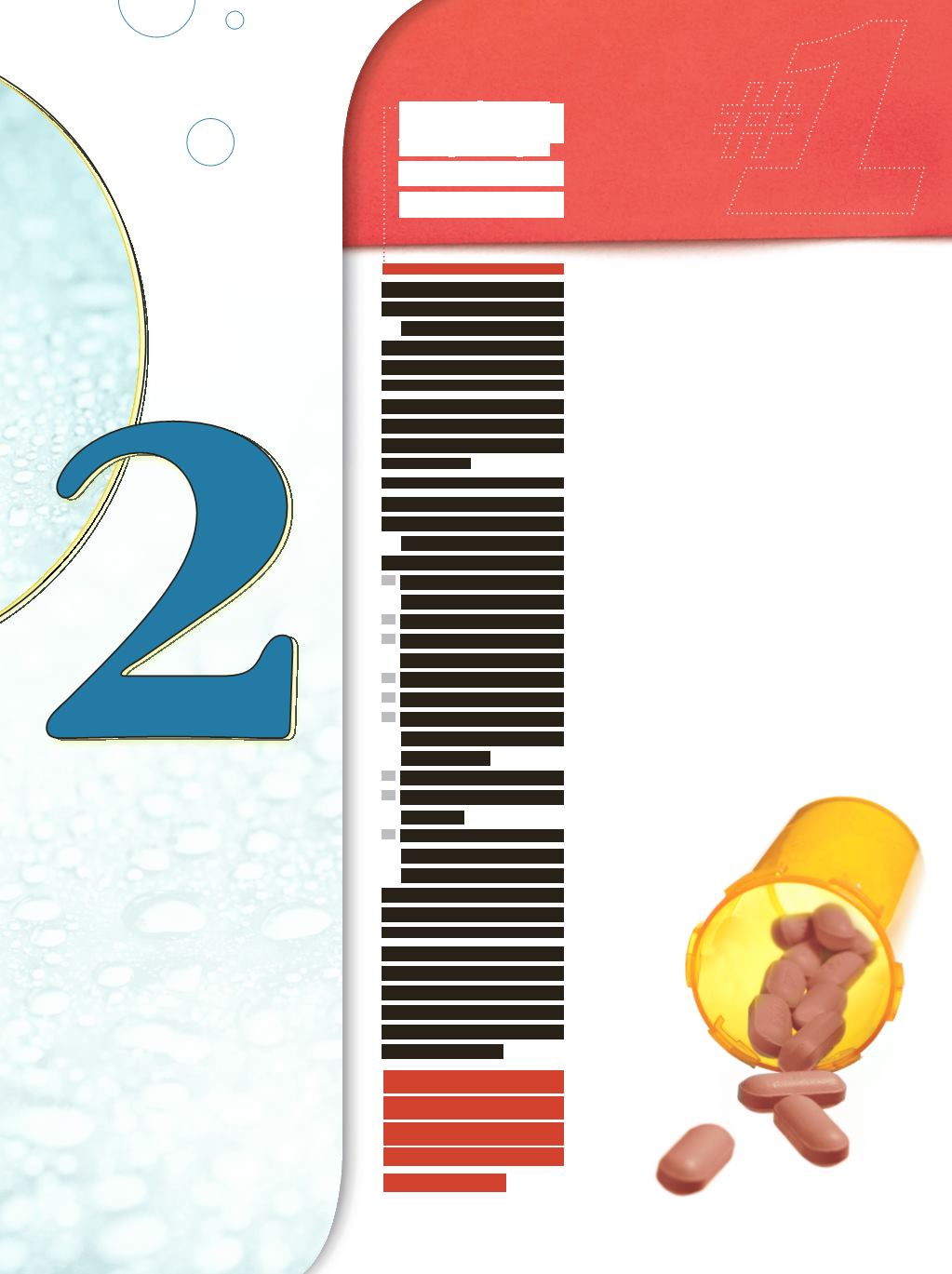
Self-administrable medications include those medications that
a patient can give themselves, such as tablets, capsules, inhalers,
insulin injections, creams, ointments, eyedrops and eardrops.
In order to be able to use their own medication supplies, the
medication must meet the following criteria:
➜
The medications are in the original prescription bottle from the
pharmacy or manufacturer with an expiration date printed on it.
➜
The medications are not expired.
➜
The medications can be identified via markings or imprints.
A patient’s own medications
will not
be used if:
➜
The patient is in isolation (infectious condition) for any reason.
➜
The patient is being tested for MRSA or
Clostridium difficile
.
➜
The medications are not in the original prescription bottle from
the pharmacy or manufacturer bottle with an expiration date
printed on it.
➜
The medications are expired.
➜
The medications cannot be identified via markings or
imprints.
➜
The medications are considered to be herbal,
alternative or homeopathic medications.
When a patient brings in his or her own
supply of medication, it is sent to the inpatient
pharmacy for verification by a pharmacist.
The medication is labeled and barcoded
for safe medication administration by
a registered nurse. The medications
are kept secure in a locked area on the
inpatient unit. All medications are
returned to the patient upon discharge
from the hospital.
And It Helped!
During his hyperbaric treatment
schedule, Zwirschitz also received
specialized wound care at the
Aspirus Wound & Hyperbaric
Center to give his wounds the best
chance to heal. About halfway
through the treatments, he knew
he was on his way to recovery
when doctors began to see tissue
healing and the wounds finally
start to close.
Now, with his wounds healed
and a special shoe insert, he walks
normally. This would not have
been possible without hyperbaric
oxygen treatments.
“It was a long, tough grind,
but it sure was worth it,” he says.
“Foot amputation would have been
certain without hyperbarics.”
• Pathways
13


